Filing a roof insurance claim after a Richmond storm
Storm claims go smoothly when you do things in the right order: protect the house, document the damage, read your policy, then file. Here is that order, from the morning after the storm to the finished roof.
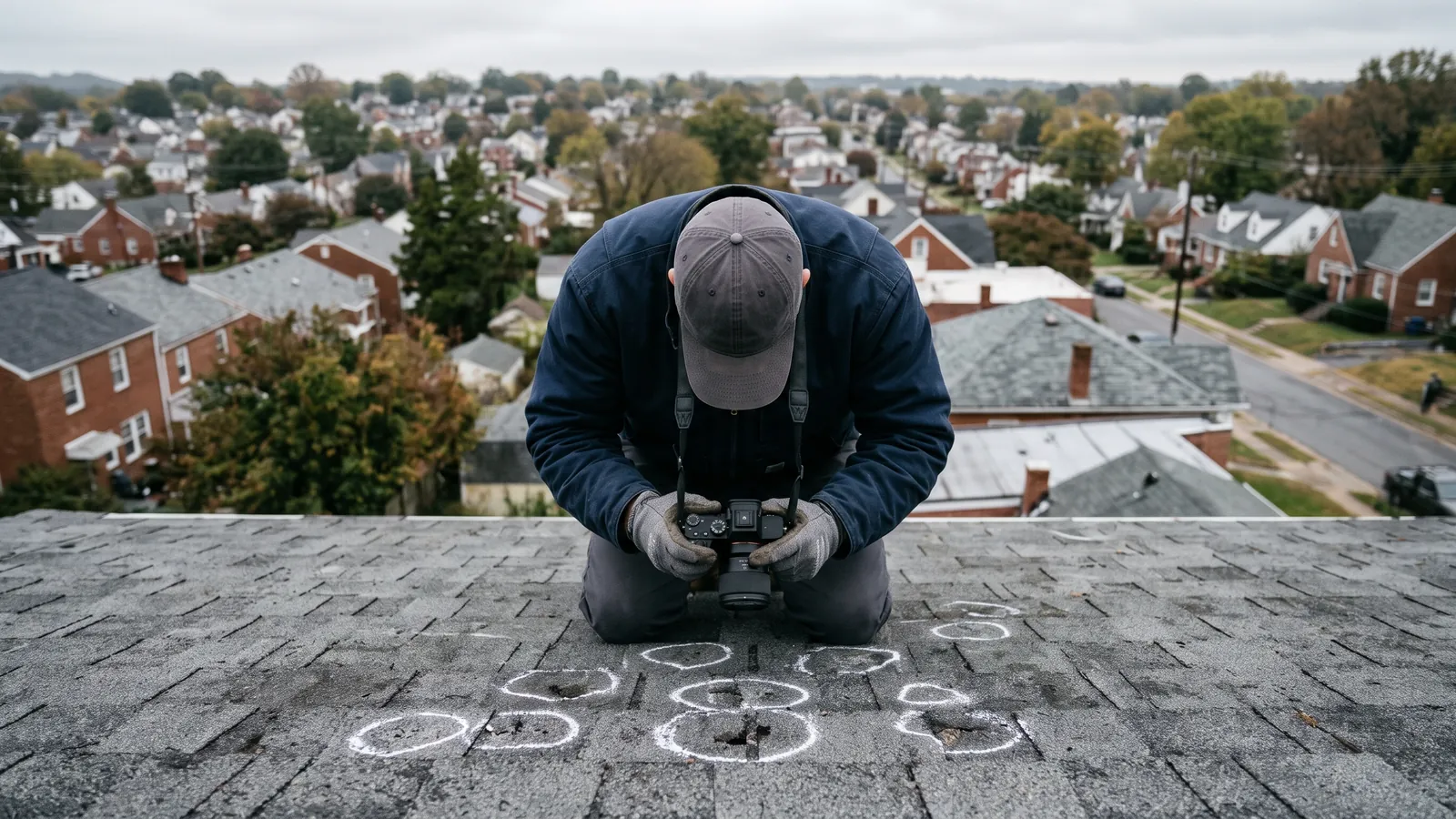
Step 1: Make it safe and stop more damage
If the roof is open or leaking, get it tarped. Insurers generally expect you to prevent further damage, and many policies reimburse reasonable emergency repairs. Keep the invoice and photos. Stay off the roof yourself, and keep away from downed power lines.
Step 2: Document everything
- Take photos and video from the ground of every side of the house, the yard, gutters, downspouts, siding, windows and any fallen limbs.
- Photograph interior damage: ceiling stains, wet insulation, damaged belongings.
- Write down the date and time of the storm. Local news and National Weather Service reports help pin down hail and wind events.
- Have a roofer inspect the roof and attic and photograph the damage up close. Hail bruises and creased shingles don't show from the ground.
Step 3: Read your policy
Check your deductible (many policies have a separate wind or hail deductible, sometimes a percentage of the home's insured value), whether the roof is covered at replacement cost or actual cash value, and how long you have to report damage. If the repair is less than your deductible, filing may not be worth it.
Step 4: File the claim
Call your insurer or file online. Give them the date, a description and your photos. They will assign an adjuster and schedule an inspection.
Step 5: The adjuster visit
The adjuster inspects the roof and decides what is covered. You can ask your roofer to be there; we're happy to walk the roof with the adjuster and point out what we found. Get a copy of the adjuster's estimate.
Step 6: Compare and schedule
Compare the adjuster's scope with your roofer's estimate. If items are missing, such as flashing, drip edge or code-required parts, your roofer can document them and you can ask the insurer to review. Once you and the insurer agree, schedule the work. Some insurers pay in two parts: one check up front, and the rest (recoverable depreciation) after the work is done.
Watch out for
- Door-knockers the morning after a storm with out-of-state plates.
- Pressure to sign today.
- Contracts that assign your insurance benefits to the contractor.
- Offers to "cover your deductible", which can amount to insurance fraud.
- Anyone who can't show a Virginia DPOR contractor license.
Quick questions
Should I call the insurer or a roofer first?
Get the roof looked at first, unless it's an obvious major loss. You'll know whether there's damage worth claiming, and you'll have photos when you call.
Will filing a claim raise my premium?
It can, depending on your insurer and claim history. Weather claims are often treated differently from others; ask your agent.
Can you deal with the insurance company for me?
We document the damage, give a detailed estimate and meet the adjuster. The claim itself is between you and your insurer.
Keep reading: Storm damage repair · After a storm · Financing