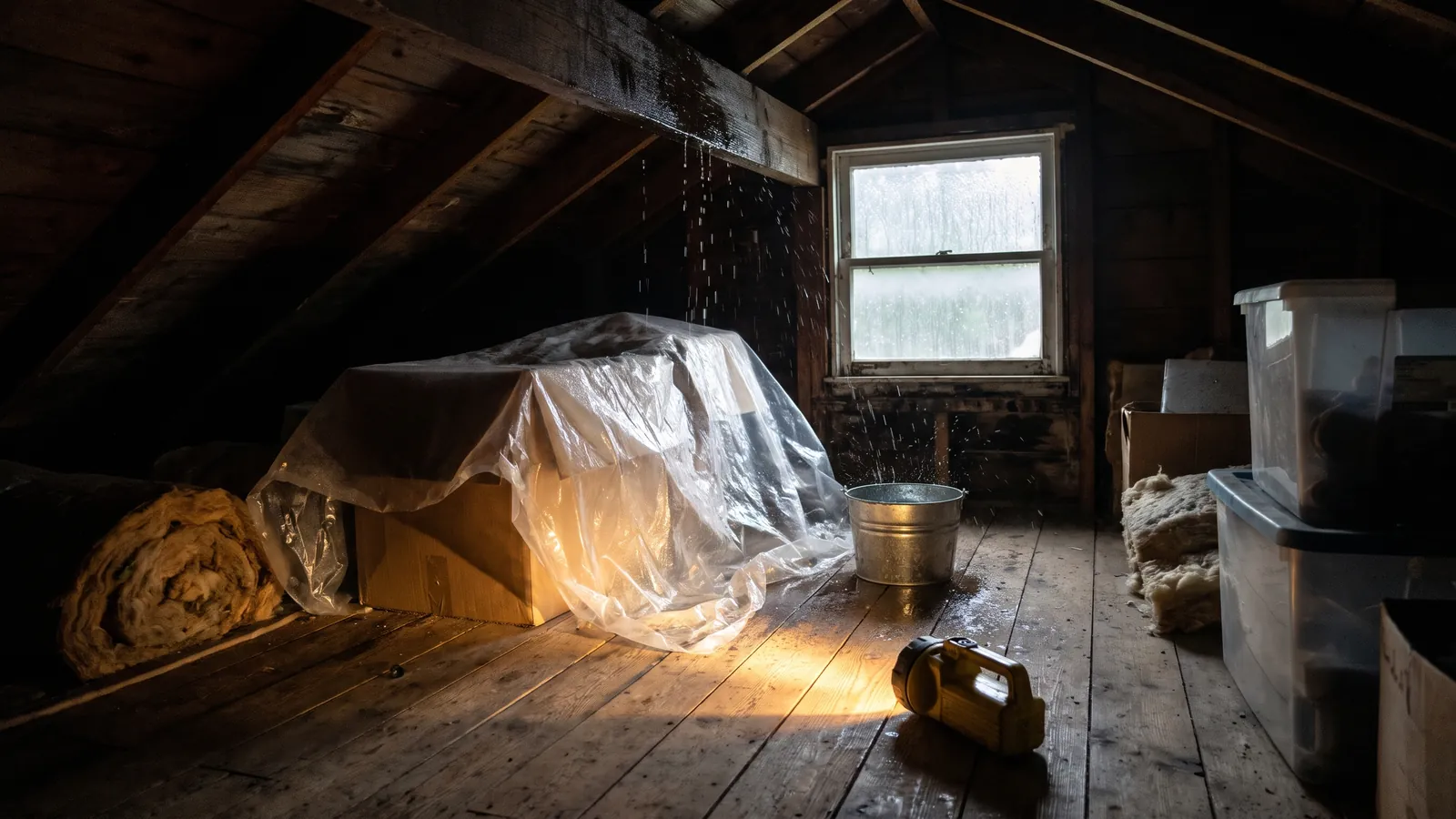
The first hour
- Get people safe. Leave rooms where a ceiling is sagging or a limb has come through. If you smell gas or see sparking, leave the house and call 911.
- Stay away from power lines. If lines are down on or near the house, report them to Dominion Energy and stay well back.
- Cut power to wet circuits. If water is coming through a light fixture or near outlets, turn off that circuit at the panel if it's safe to reach.
- Catch the water. Buckets, towels, plastic sheeting over furniture. If a ceiling is bulging with water, poke a small hole at the lowest point over a bucket to drain it in a controlled way.
- Don't go on the roof. Wet, damaged roofs are dangerous even for professionals.
The first day
- Call a roofer for a tarp. An emergency tarp over the damage keeps more rain out. Insurers generally expect you to take reasonable steps like this.
- Photograph everything. Outside from the ground, inside damage, belongings. Date-stamp if your phone allows.
- Move valuables and dry out. Get wet items out of the affected rooms; run fans and dehumidifiers if the power is on.
- Note the details. Storm date and time, what you saw and heard, and when you first noticed the damage.
The first week
- Get a full inspection. Roof and attic, with photos, so you know the full extent.
- Read your policy and decide on a claim. Check the deductible and reporting time limit. See the claim guide.
- Watch for mold. Wet insulation and drywall can grow mold within days. Remove or dry anything that stays damp.
- Get a written repair price. Compare if you like, and be wary of anyone pressing you to sign on the spot.
What a good emergency tarp looks like
A tarp that will hold until the repair runs over the ridge where possible, is fastened with wooden battens screwed into the deck, and is pulled tight so water runs off instead of pooling. Bricks and a few nails don't last the first gusty night. If the decking is broken, temporary plywood should go on before the tarp.
Quick questions
How fast should a tarp go on?
As soon as it's safe, ideally the same day. Each rain through an open roof adds damage to decking, insulation and ceilings.
Can I put a tarp on myself?
We'd advise against climbing a damaged, wet roof. If you do, never work alone and stay off steep slopes.
Will my insurer pay for the tarp?
Many policies reimburse reasonable emergency repairs. Keep the receipt and photos.
Keep reading: Emergency roofing · Storm damage repair · Insurance claims