Flat roofs on Richmond rowhouses, porches and additions
Walk down an alley in the Fan, the Museum District or Church Hill and look up: behind the pretty fronts, most of those rowhouses have a flat or nearly flat roof. They are their own kind of roof, and they fail in their own ways.
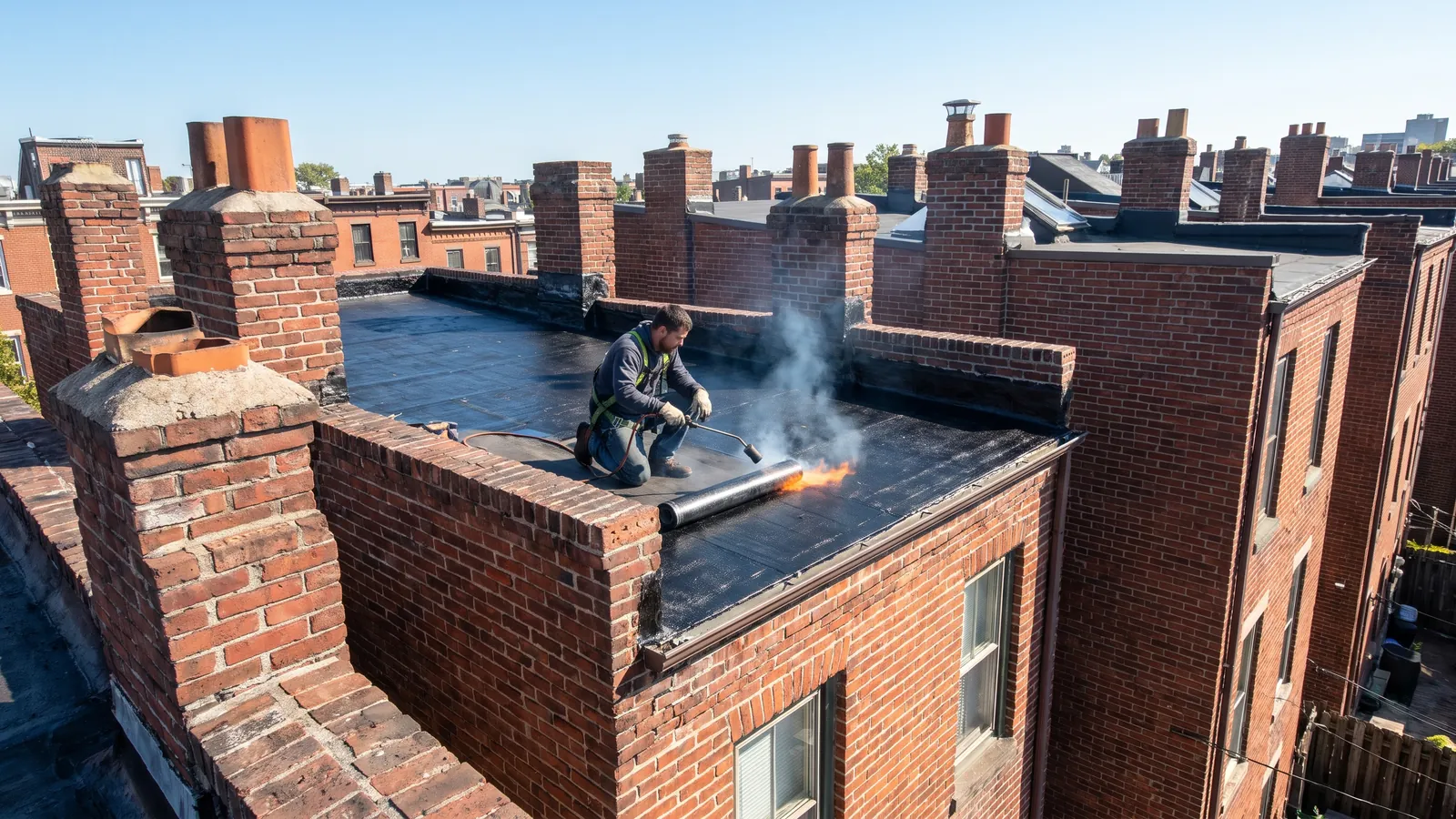
A flat roof is never truly flat. It should slope a little toward a scupper, a drain or a gutter, and when it doesn't, water ponds, the membrane wears where the water sits, and every small crack becomes a leak. Many of the rowhouse roofs in Richmond's older neighborhoods have been patched for decades, sometimes with layer on layer of tar and roll roofing, and the slope has been lost along the way.
The materials we use on low-slope roofs are:
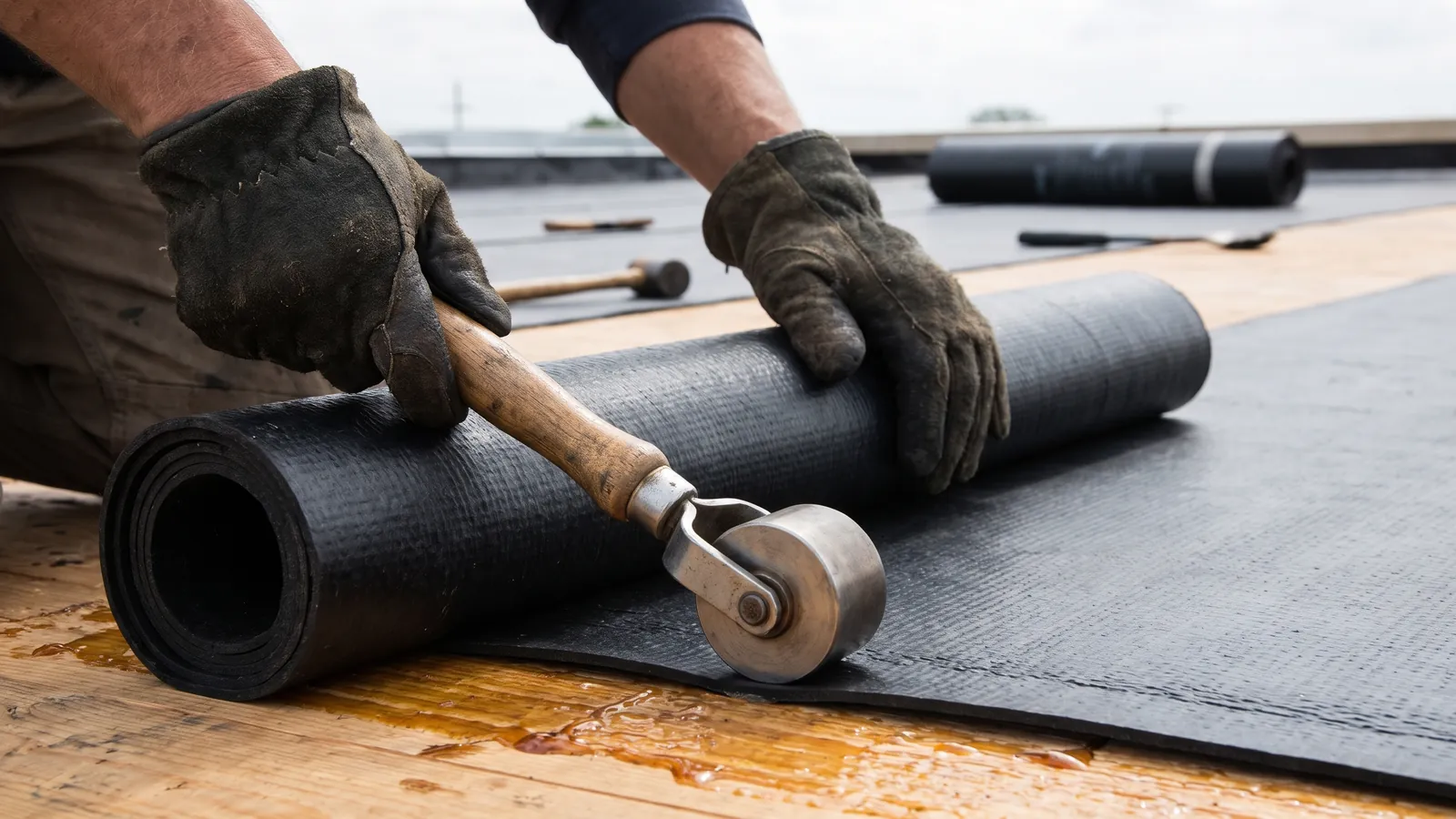
- Modified bitumen: asphalt-based sheets, torched or self-adhered, a durable choice for rowhouses with foot traffic from rooftop units and chimney work.
- EPDM: black rubber membrane in large sheets with few seams, good on simple roofs and additions.
- TPO: white, heat-welded membrane that reflects summer sun, common on larger and commercial roofs.
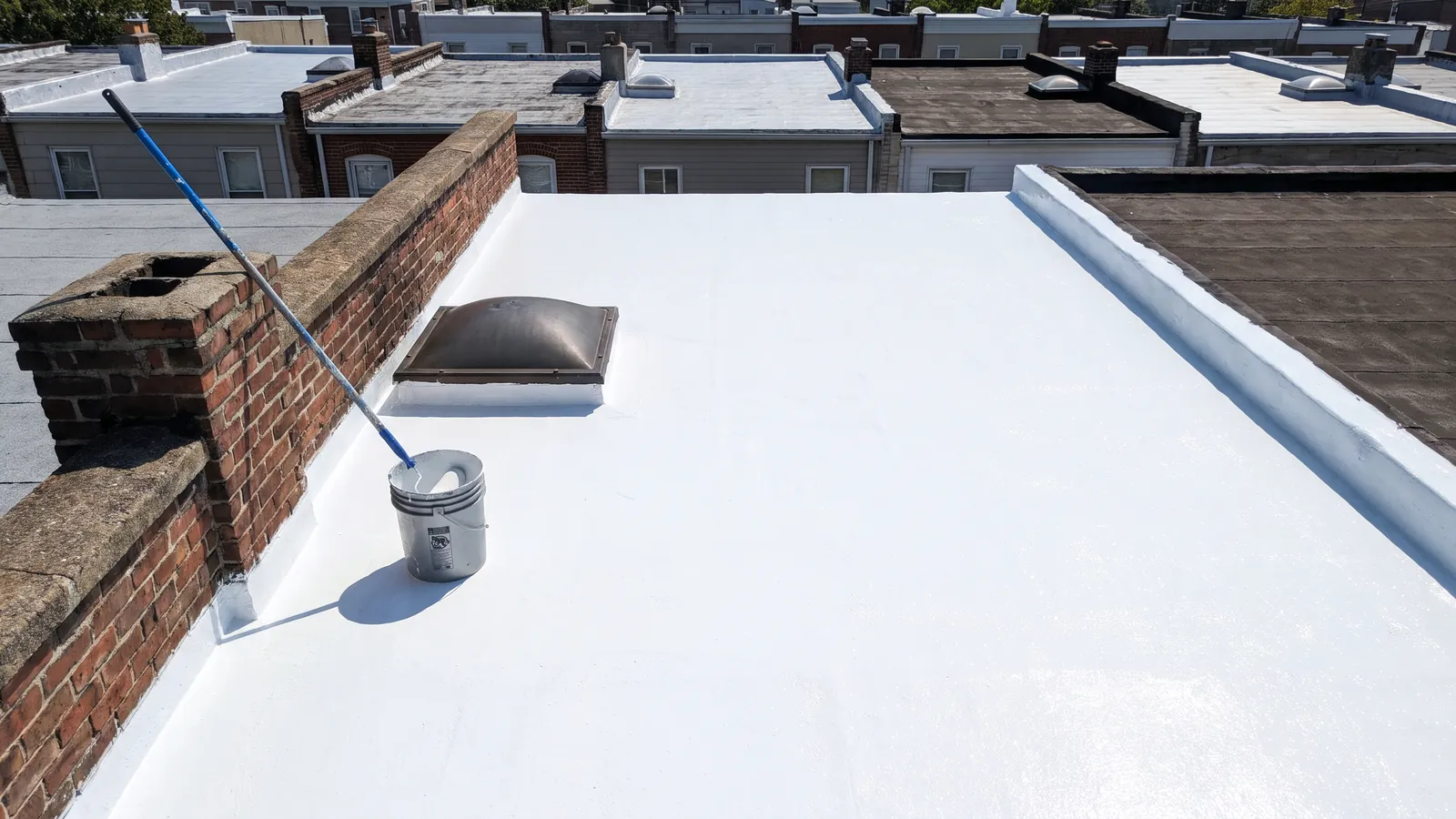
- Coatings: elastomeric or silicone coatings over a sound existing roof, which can add years and cool the top floor, but only when the roof underneath is still in decent shape.
Repairs on flat roofs usually mean opening up blisters, re-laying split seams, re-flashing parapet walls and chimneys, rebuilding the edge at scuppers and gutters, and patching punctures from foot traffic or dropped tools. We cut a core when needed to see how many old layers there are and whether the insulation or deck underneath is wet.
Replacement means stripping the old layers, repairing the deck, adding tapered insulation where we can to restore the slope, and installing the new membrane with proper flashing up the parapets and around every penetration. The joint where a sloped front roof or mansard meets the flat rear roof is a classic leak point on rowhouses, and it gets extra attention.
What the job includes
Core cut when needed
A small sample shows how many layers, and whether the insulation and deck are wet.
Slope restored
Tapered insulation or crickets added where water ponds, so it moves to the drains.
Parapets re-flashed
Membrane carried up and over parapet walls with new coping or counter-flashing.
Material to suit
Modified bitumen, EPDM, TPO or a coating, chosen for the roof, not the other way round.
Front-to-back junction
The rowhouse joint between sloped front and flat rear roof rebuilt carefully.
Scuppers and drains
Edges, scuppers and downspout connections rebuilt so water leaves the roof.
Flat roof repair prices around Richmond
| Work | Typical range | What moves it |
|---|---|---|
| Flat roof leak repair | $400 – $1,500 | Seam, blister, flashing or edge |
| Reflective coating over sound roof | $3 – $6 per sq ft | Prep, repairs needed first |
| Modified bitumen replacement | $7 – $12 per sq ft | Tear-off layers, insulation |
| EPDM or TPO replacement | $8 – $14 per sq ft | Insulation, edge metal, parapets |
| Typical Fan District rowhouse rear roof | $6,000 – $14,000 | Size, layers, parapet work |
| Parapet re-flash and new coping | $40 – $90 per linear ft | Wall height, coping type |
Budgeting ranges for the Richmond area in 2026. Your own price is written down after the roofer has been on your roof, and it doesn't change unless you approve a change.
On the job
Questions about flat roof repair
How long does a flat roof last?
A good modified bitumen, EPDM or TPO roof lasts 20 to 30 years with care. Coatings typically need renewing every 10 to 15 years.
Why does water pond on my flat roof?
The slope has been lost, usually from deck sag or layers of old patching, or the drains and scuppers are blocked. Ponding speeds up wear; tapered insulation fixes it during replacement.
Can I coat my old flat roof instead of replacing it?
If the roof is mostly sound and dry underneath, yes, and it can be a good value. Coating over a wet or failing roof just traps the problem; a core sample tells us which you have.
Can you work on my rowhouse roof without access from the street?
Usually. Most rowhouse roofs are reached from the rear alley, through a scuttle hatch or from a neighbor's roof with permission. We plan access during the estimate.
Which is better, white or black membrane?
White TPO or coatings reflect summer heat and keep top floors cooler. Black EPDM is simple and durable. On a rowhouse top floor in a Richmond summer, many owners notice the difference with white.